
Looking to the Future: IHC's Plan for Long-term Volunteering Through Shorter-term Assignments
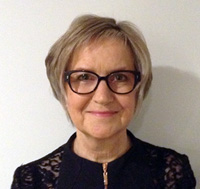
It all began when people with intellectual disability told us they wanted their own friends: friends who were not part of their own family or paid to spend time with them. At IHC we listened, and that premise became the foundation that IHC Volunteer Friendship Programme is based on: One person with intellectual disability is matched with one volunteer, and both decide together what they want to do out in their communities. — Sue Kobar
IHC is New Zealand’s largest provider of services to people with intellectual disabilities and their families. Its one-to-one, Volunteer Friendship Programme has been very successful. As author Sue Kobar explains in this feature story, IHC’s desire to attract younger volunteers has now expanded the concept of what the friends do together to include opportunities for much shorter, focused, and task-specific volunteering. While maintaining the same one-to-one premise, IHC implemented skill-based volunteering to support a person with intellectual disability as he or she sets out to learn a new skill (like using public transportation, for instance) or to achieve a personal goal (say, attend a Zumba class).
As Kobar explains, these shorter-term assignments are a win-win for all involved. Such opportunities, which allow volunteers to set the time commitment to fit the project, have attracted younger volunteers to IHC who may very well be on the road to long-term volunteering. And along the way, the people supported by IHC learn new life skills.

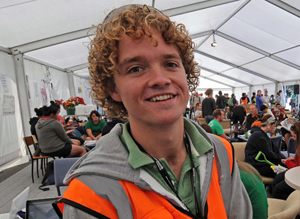 When massive earthquakes hit Christchurch, New Zealand in February 2011, university students wanted to help in the clean-up. But established first response agencies were wary of these young volunteers and too harried to work with them, so they turned them away. Sam Johnson, a student leader, would not take "no" for an answer. He turned to Facebook and put out a call to his friends. Within hours, Johnson had recruited a team of workers and borrowed enough loaned equipment to go out and simply start “mucking out.” Over the next several days, as his social network spread the word, hundreds and then thousands of students stepped forward. They called themselves the Student Volunteer Army (SVA) and eventually numbered 9,000 volunteers, earning the respect and support of the local authorities along the way. The story of Johnson and the Student Volunteer Army eventually drew headlines around the world, and attracted the attention and praise of everyone from Prince William of England to Secretary of State Hillary Clinton of the United States. Because of the media attention SVA received, the student volunteers were invited to Japan after the tsunami hit to work with a like-minded team of students. And Johnson recently returned from the World Summit for Youth Volunteering in Colombia, South America, where he presented on the role of Youth in Disaster.